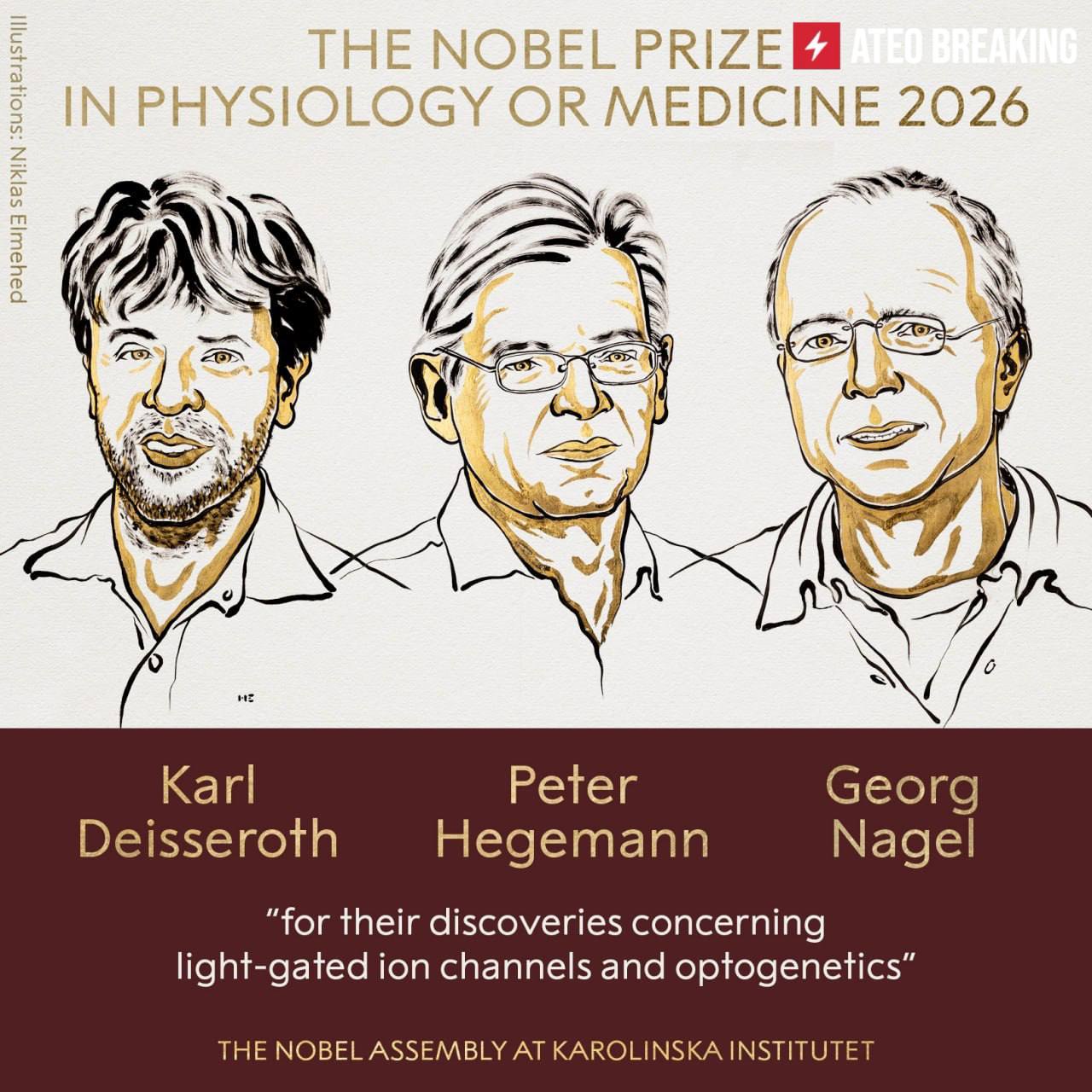
On October 5, 2026, it was announced that the Nobel Prize in Medicine was awarded to three distinguished scientists: Karl Deisseroth, Peter Hegemann, and Georg Nagel. They were honored for their significant contributions to the study of light-sensitive ion channels and the development of optogenetics.
Contributions of the Laureates to Science
The research for which these scientists received the Nobel Prize opened new horizons in neurobiology and medicine. The light-sensitive ion channels they studied allow for the control of neuronal activity using light. This discovery laid the foundation for the development of optogenetic technologies, which are used to treat various neurological disorders.
The Importance of Optogenetics
Optogenetics as a field enables scientists to manipulate neuronal activity with high precision. This has been made possible by:
- The study of light-sensitive proteins that can be introduced into neurons.
- The development of methods for stimulating neurons using light.
- The use of optogenetic technologies to study brain functions.
These achievements hold tremendous potential for clinical applications, particularly in the treatment of depression, Alzheimer's disease, and other neurological conditions.
Recognition and Future Research
The awarding of the Nobel Prize is not only a recognition of the individual achievements of these scientists but also highlights the importance of their work for the advancement of medicine and biology. Experts believe that further research in this field may lead to new treatment methods that could change approaches to therapy for neurological diseases.