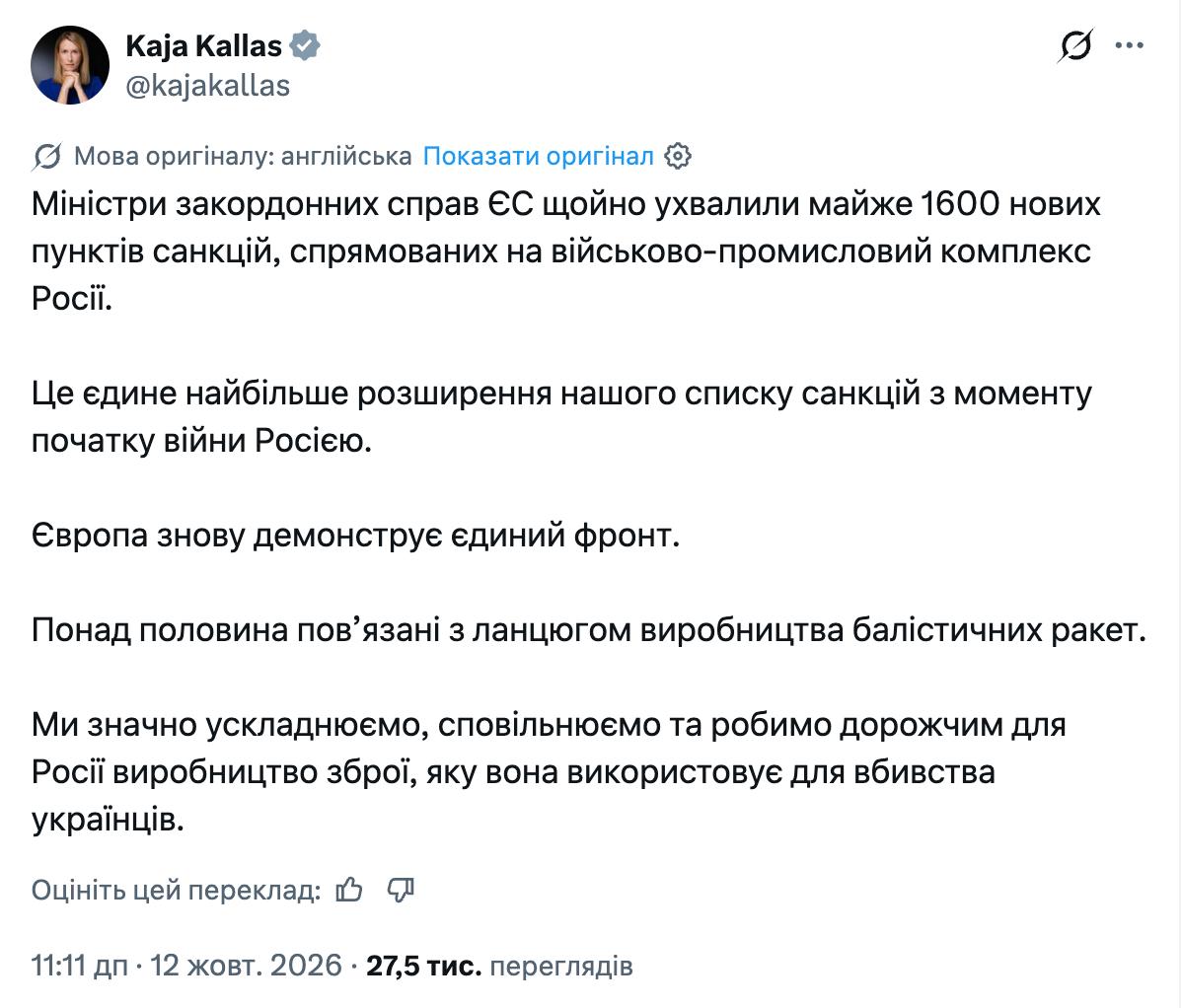
On October 12, 2026, the foreign ministers of the European Union decided to impose sanctions on nearly 1,600 new individuals and organizations linked to Russia's military-industrial complex. This marks the largest single expansion of the sanctions list since the beginning of the war, as reported by the EU's high representative Kaja Kallas.
Key Details of the New Sanctions Package
The new expansion of the sanctions list primarily concerns individuals and companies involved in the production of ballistic missiles. According to Kallas, more than half of the newly sanctioned entities are connected to this production chain. This indicates the EU's intention to increase pressure on Russia in light of the ongoing conflict in Ukraine.
Context and Consequences
This decision is part of a broader strategy by the EU to counter Russian aggression. The imposition of sanctions is a response to Russia's actions in Ukraine and aims to limit the Kremlin's capabilities in conducting warfare. The new sanctions will undoubtedly impact the Russian military-industrial complex, which has already suffered significant losses due to previous restrictions.
Reactions from the International Community
Reactions to the new sanctions from the international community have not yet received widespread coverage; however, experts believe that this may encourage other countries to join the EU's efforts in countering Russia. It is noted that the sanctions could also affect Russia's internal politics, intensifying public discontent due to economic hardships.