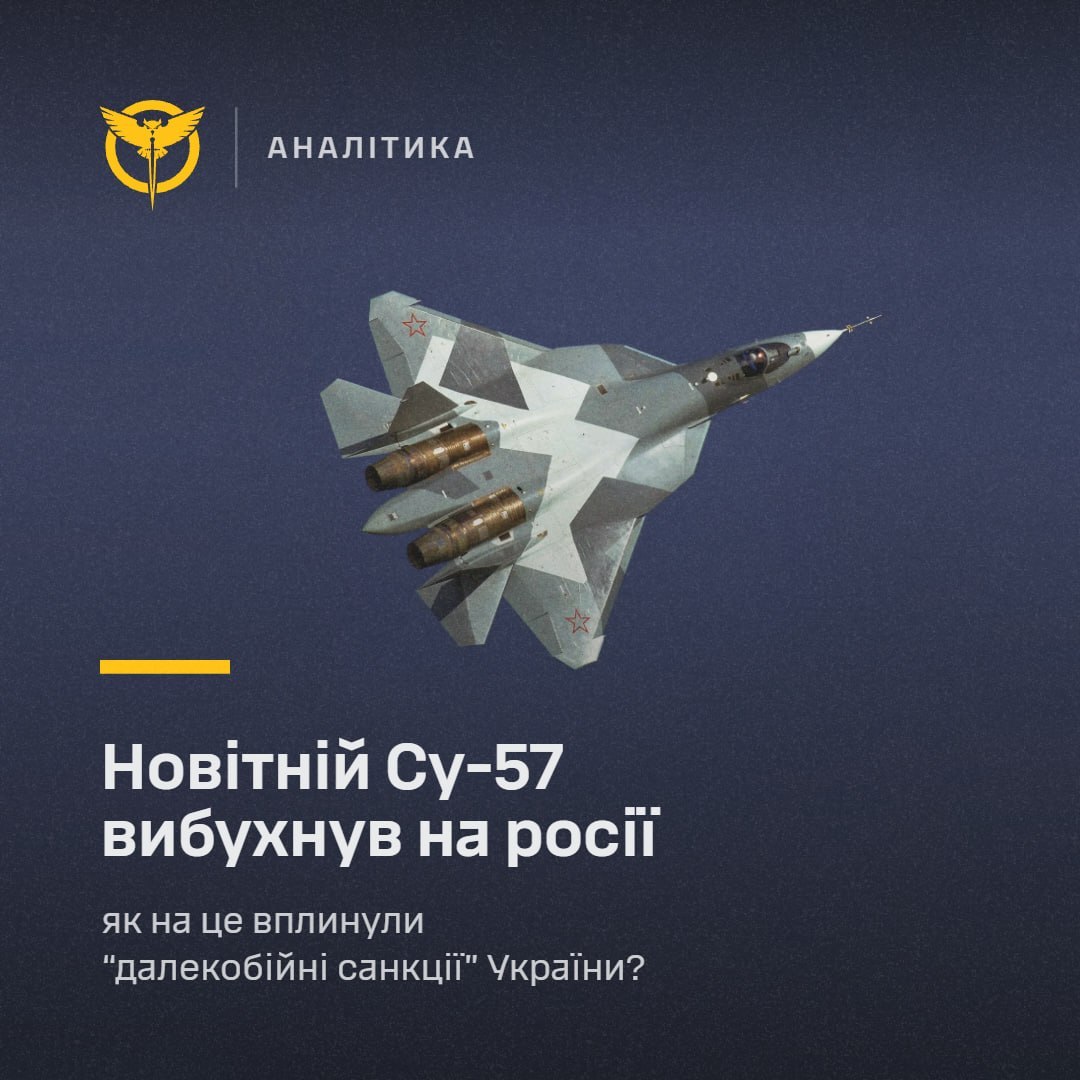
On October 29, an explosion occurred involving the latest Su-57 fighter jet at the Akhtubinsk military airfield in Russia, with an estimated cost of around $150 million. The incident took place during the engine startup phase, raising serious concerns about the quality of the fuel used.
Causes of the Su-57 Explosion
According to the Main Intelligence Directorate (GUR), the primary reason for the explosion is the poor quality of aviation fuel. The Su-57 is equipped with an aviation turbojet dual-circuit engine AL-41F1, which can suffer catastrophic failures when using substandard fuel.
This incident occurred against the backdrop of reduced aviation fuel production in Russia, which, according to intelligence reports, is caused by long-range strikes by Ukrainian forces on oil refining infrastructure. As a result, Russia is increasingly reliant on imported aviation fuel.
Impact on Russia's Aviation Industry
The explosion of the Su-57 could have serious consequences for the Russian aviation industry, potentially affecting:
- Increased costs for producing new aircraft;
- Decreased trust in the quality of Russian aviation technologies;
- Further growth in dependence on imported fuel.
Previously, the GUR also uncovered a scheme for supplying gasoline and aviation fuel to Russia from the Indian refinery Nayara Energy, highlighting Russia's growing reliance on external suppliers.