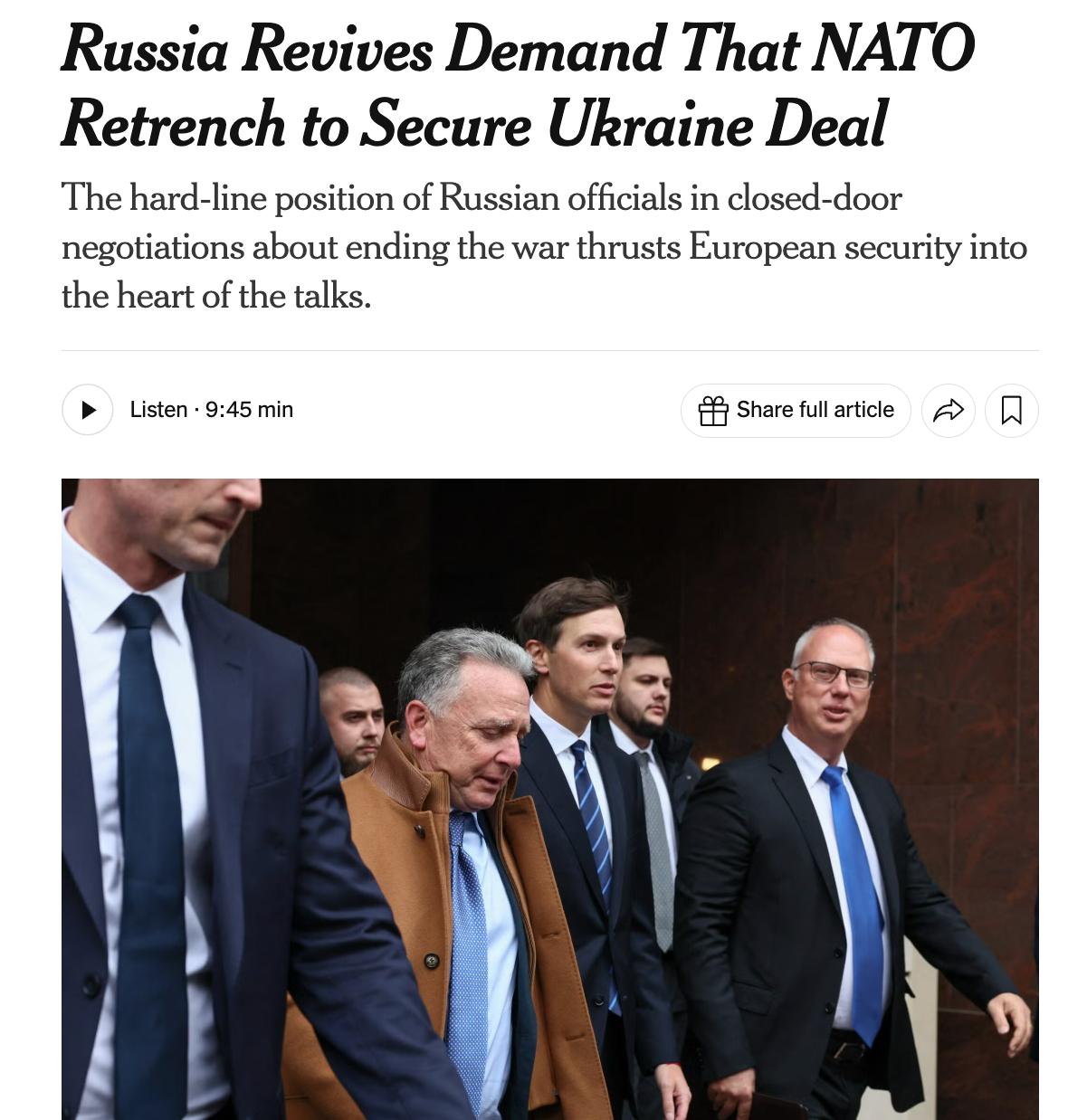
On November 14, 2026, Russia once again raised the issue of discussing the architecture of European security during peace negotiations regarding Ukraine, leading to deepening divisions among European Union countries.
Divisions Among EU Leaders
The President of the European Commission, Ursula von der Leyen, and some other EU leaders support the idea of discussing the future security system of Europe alongside peace negotiations. However, countries bordering Russia believe that this could play into the Kremlin's hands, allowing it to impose its agenda. They emphasize that an aggressive Russia has no right to demand protection from Europe.
Russia's Demands at the Negotiations
At closed negotiations in Abu Dhabi, Russia reiterated its demands, which include:
- Withdrawal of NATO forces to the borders of 1997.
- Complete cessation of military aid to Ukraine.
- Rejection of NATO's further expansion and military activities on the territory of Ukraine, Eastern Europe, the Caucasus, and Central Asia.
- Withdrawal of NATO troops and military bases from Poland and the Baltic states.
- Prohibition of Ukraine's participation in the EU's common defense policy.
- Rejection of France and the UK’s nuclear umbrella for other European countries.
These demands closely mirror Moscow's position presented in December 2021, shortly before the full-scale invasion of Ukraine.
EU and NATO's Stance
The EU's chief diplomat, Kaja Kallas, warned that discussing Russian proposals could lead to falling into Moscow's trap. She emphasized that historically, Russia's demands to change the architecture of European security are linked to limiting NATO's expansion, which is unacceptable for Europe.
Some European officials believe it is important to demonstrate readiness for dialogue to maintain the involvement of the US and Russia. However, they insist that no decisions can be made until a peace agreement is reached and without the consent of all EU and NATO countries.