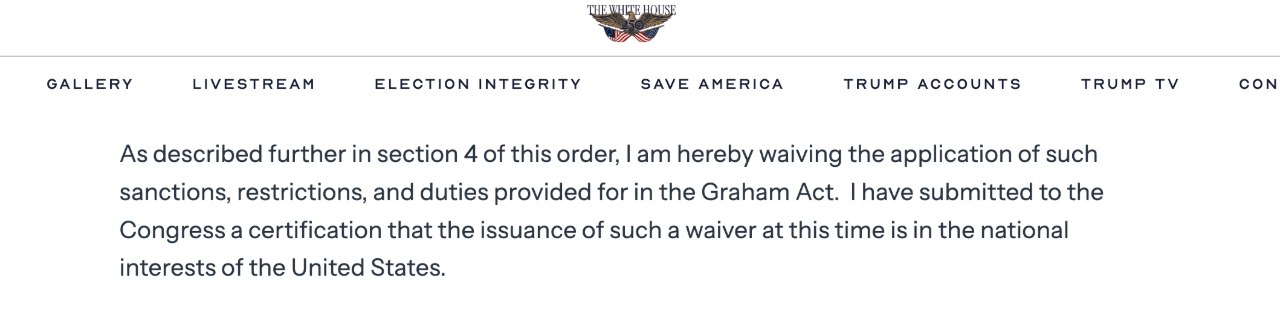
On October 17, 2026, Donald Trump announced his official refusal to impose sanctions against Russia as stipulated by Senator Lindsey Graham's law. In his statement, Trump emphasized that his decision is based on an assessment of the national interests of the United States.
Trump's Statement
In his statement, Trump noted: "I hereby refuse to apply such sanctions, restrictions, and obligations. I have submitted a memorandum to Congress indicating that this refusal is currently in line with the national interests of the United States." This decision has sparked various reactions in political circles, as the sanctions were intended to increase pressure on Russia due to its actions on the international stage.
Context of Graham's Law
The law initiated by Lindsey Graham provides for the imposition of sanctions against Russia for a number of actions deemed aggressive and violating international law. Trump's refusal may affect the U.S. relations with allies who support the idea of sanctions as a tool to pressure the Kremlin.
Reactions from Political Analysts
Political analysts express concern over Trump's decision, pointing to potential consequences for U.S. foreign policy. Key observations include:
- Possible weakening of the U.S. position on the international stage.
- Increased criticism from opposition parties who believe this decision undermines efforts to deter Russia.
- The need to reassess U.S. foreign policy strategy towards Russia.