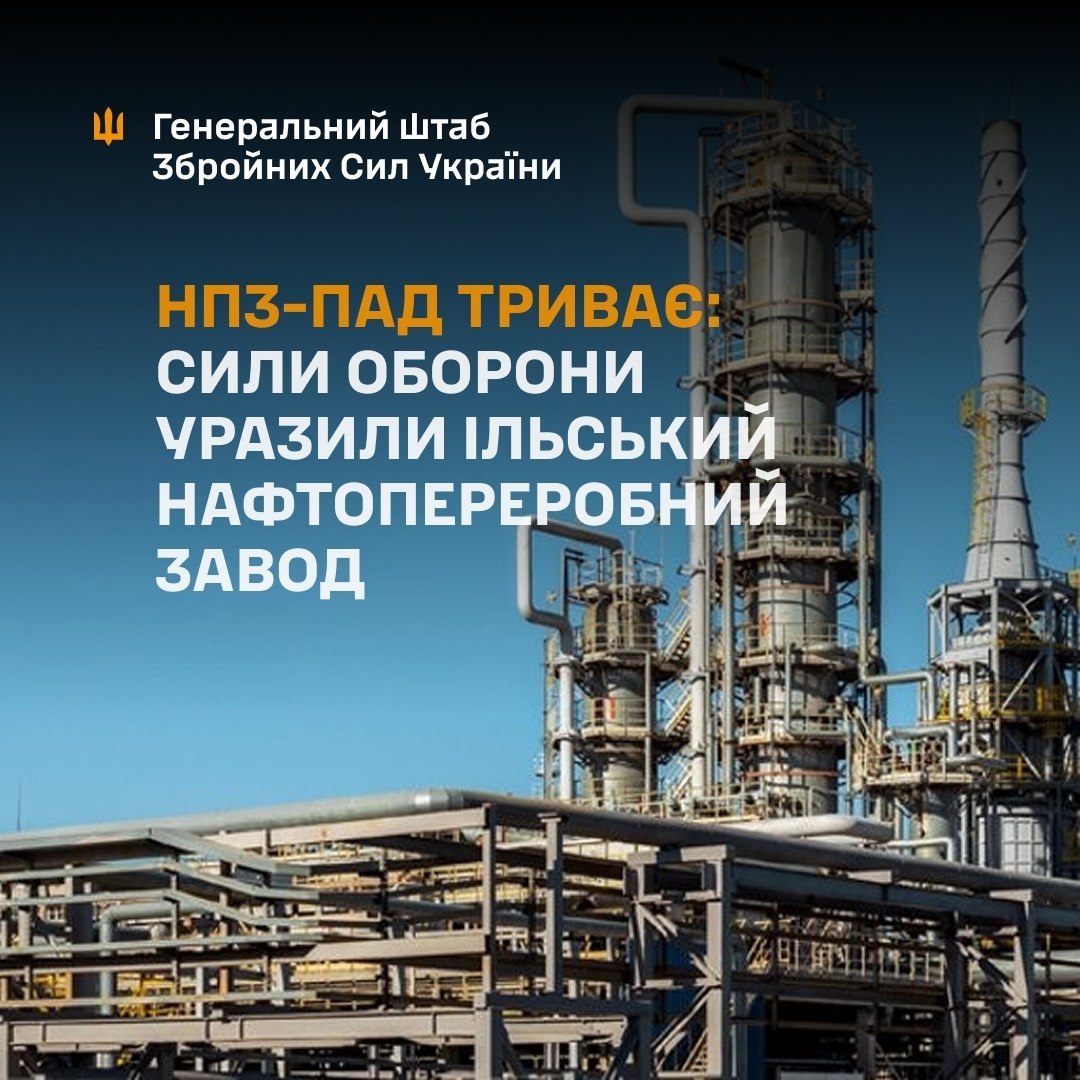
On November 16, 2026, the Ukrainian Defense Forces struck the Ilsky oil refinery located in the Krasnodar region of Russia. This refinery is one of the largest oil processing facilities in southern Russia, capable of processing approximately 6.6 million tons of oil per year. The strike targeted key production units that facilitate the primary processing of oil and the production of automotive gasoline.
Details of the Attack on Ilsky Refinery
According to the General Staff of the Armed Forces of Ukraine, the attack hit the atmospheric tubular oil processing units AT-4, AT-5, AT-6, which are critical for fuel production. This output is notably used to supply the Russian armed forces. The extent of the damage caused is currently being assessed.
Attacks on Oil Depots in Rostov Region
Additionally, Ukrainian forces targeted two oil depots in the city of Azov, Rostov region. The operation, named Deep Strike, was conducted in collaboration with the insurgent group "Black Spark." The following facilities were hit:
- The "Transit-Express" oil depot, which receives, stores, and dispatches light and dark oil products.
- The "Azov" depot, which has storage tanks with a capacity of up to 30,000 m³ of fuel and can handle up to 60,000 tons of fuel monthly.
As a result of the attacks on these facilities, explosions were reported, and a fire broke out at one of the sites. These strikes are part of a strategic campaign by the Ukrainian Defense Forces aimed at disrupting the logistics and resources of the enemy.
Conclusions and Future Actions
The attacks on the Ilsky refinery and oil depots in the Rostov region indicate an increasing effectiveness of Ukrainian forces in combat operations. Damaging critical infrastructure that supplies fuel to the Russian army could significantly impact the enemy's combat capabilities. Future actions by the Ukrainian Defense Forces are likely to continue targeting crucial infrastructure objects.